


Buganda’s Untapped Tourism Goldmine Takes Spotlight at Landmark Cultural Tourism Dialogue
Updated: Jun 10
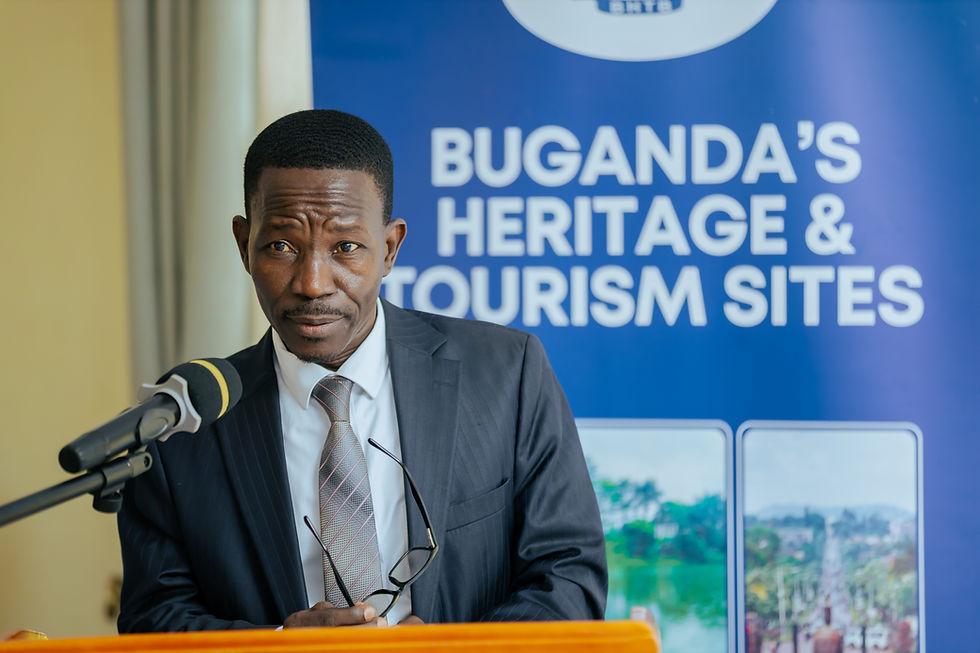
Kampala, 6 May 2026 – The Ministry of Tourism, Wildlife and Antiquities (MTWA) and the Buganda Kingdom have reaffirmed their commitment to working together to unlock the Kingdom’s vast cultural tourism potential as a catalyst for inclusive growth, job creation, heritage conservation and national transformation.
This was the key message during the Cultural Tourism Dialogue held at the Buganda Heritage and Tourism Board Boardroom in Kampala under the theme: “Unlocking the Potential of Cultural Tourism in Buganda for Inclusive Growth and National Transformation.” The engagement brought together officials from the Buganda Kingdom, Government Ministries, Departments and Agencies, development partners, Tourism private sector players, cultural institutions and the media to explore practical pathways for developing and promoting cultural tourism within the Kingdom.
Representing the Permanent Secretary of the Ministry of Tourism, Wildlife and Antiquities, Mrs. Doreen Katusiime, the Under Secretary, Mr. Geoffrey Sseremba, delivered her remarks and emphasized the strategic importance of Buganda in Uganda’s tourism landscape.
In her message, the Permanent Secretary described Buganda as Uganda’s largest and most influential cultural institution, noting that its rich traditions, historical sites, cultural expressions and heritage assets form a cornerstone of the country’s tourism offering. She applauded the Kingdom’s efforts in preserving and promoting cultural heritage, highlighting the ongoing redevelopment of the Kasubi Tombs and the establishment of the Buganda Heritage and Tourism Board as significant milestones in advancing cultural tourism.
Speaking on behalf of the Buganda Kingdom, the CEO of the Buganda Tourism and Heritage Board, also representing the Hon. Minister Owek Dr. Anthony Wamala, Hon. Minister, Heritage, Palaces, Tombs, Tourism and Security, emphasized Buganda’s central role in the country’s history and cultural landscape. “Buganda holds a central and unique place in Uganda’s history, identity and cultural landscape. Its traditions, institutions, historical sites and vibrant cultural expressions are not only a source of pride for its people but also a cornerstone of Uganda’s tourism offering,” he said.
The dialogue sought to define a shared vision for tourism development in the Buganda region, identify challenges affecting growth and explore opportunities for collaboration between the Kingdom, Government institutions and the private sector.
Speaking during the engagement, the Acting Assistant Commissioner for Tourism Development, Mr. Jimmy Kigozi Andrew, underscored the need to transform Buganda’s rich cultural heritage into market-ready tourism experiences capable of attracting both domestic and international visitors.
He observed that while the Kingdom possesses an abundance of tourism assets including royal heritage sites, traditional ceremonies, storytelling traditions, indigenous knowledge systems, cultural villages, music, crafts, and cuisine, many of these resources remain underdeveloped and inadequately packaged for tourism.
“Much of the tourism potential within Buganda remains untapped. There is a need for deliberate investment in product development, interpretation, marketing and infrastructure to transform these cultural assets into competitive tourism experiences that generate meaningful economic and social benefits,” he noted.
Mr. Kigozi emphasized that successful cultural tourism development requires strong partnerships among Government, the Buganda Kingdom, the Uganda Tourism Board, local communities, development partners and private investors.
Throughout the day, participants engaged in discussions on governance and institutional coordination, cultural heritage conservation, product development, creative industries, financing mechanisms and community participation. The sessions highlighted the importance of balancing heritage preservation with commercialization to ensure cultural resources remain protected while generating income and livelihoods for local communities.
Stakeholders also explored opportunities in agro-cultural tourism, cultural villages, digital storytelling, film, fashion, music and other creative industries as avenues for diversifying tourism products and strengthening Buganda’s brand as a leading cultural destination.
A major highlight of the dialogue was the presentation of a proposed Cultural Tourism Development Roadmap for Buganda, outlining priority projects, investment opportunities, institutional arrangements and alignment with Uganda’s Tenfold Growth Strategy. Participants further proposed the establishment of a Cultural Tourism Coordination Platform to strengthen collaboration, guide implementation, and monitor progress.
The engagement concluded with a renewed commitment by both Government and the Buganda Kingdom to deepen cooperation in promoting cultural tourism as a tool for heritage conservation, economic empowerment, and sustainable development.
As stakeholders reflected on the day’s discussions, there was broad consensus that Buganda’s rich cultural heritage represents one of Uganda’s greatest untapped tourism opportunities. With stronger partnerships, targeted investments, and coordinated action, participants agreed that the Kingdom is well positioned to become a leading cultural tourism destination in Africa while contributing significantly to Uganda’s socio-economic transformation.
The dialogue marked an important step towards building a shared roadmap for cultural tourism development, one that preserves cultural identity, creates opportunities for communities, attracts investment, and showcases the richness of Buganda’s heritage to the world.


This is the kind of article I enjoy finding online. It provides useful information while keeping the language simple and the structure easy to follow. Thank you for sharing your experience and knowledge. I learned something valuable from this post and will definitely recommend it to others who may find it useful. Ok Win Game
FNAF 3 delivers nonstop tension with its eerie setting and unpredictable gameplay. Stay calm, manage your resources wisely, and avoid the deadly Springtrap as you fight to survive each terrifying night.