


UGANDA DEEPENS GLOBAL HERITAGE PARTNERSHIPS THROUGH LANDMARK ITALY MUSEUM WORKSHOP
Updated: May 8
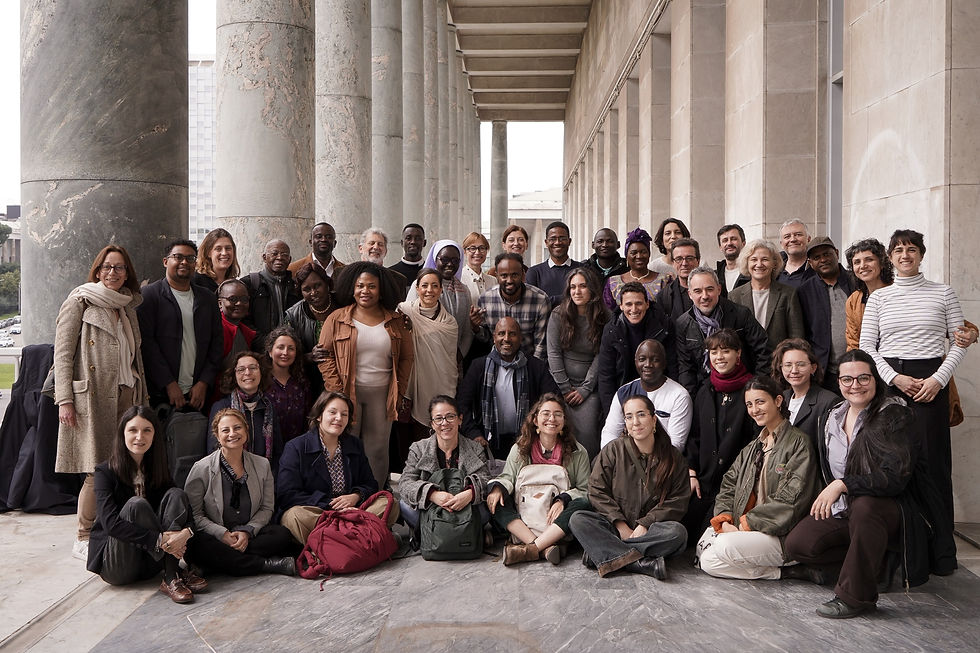
The Ministry of Tourism Wildlife and Antiquities through her department of Museums and Monuments together with Makerere University have strengthened Uganda’s position in international heritage preservation and museum innovation following the successful conclusion of the Second SAIMP Project Workshop held in Rome from 2–14 March 2026.
The workshop, convened under the Strengthening African–Italian Museum Partnerships (SAIMP) Project, brought together museum professionals, researchers, scholars and cultural institutions from across Africa and Italy under the theme “Cataloguing Practices, Digitalization, Provenance and Participatory Research.” Hosted at the Museum of Civilizations, the engagement marked a major step toward transforming how African heritage collections are researched, documented, preserved and digitally accessed.
Uganda’s delegation comprised representatives from the Uganda National Museum led by the Principal Curator Museum Services, Mr Abiti Nelson, Senior Curator Natural History Mr. Mugume Amon and young Researcher Mr. Nampwera Livingstone, alongside a multidisciplinary team from Makerere University’s school of history including head of dept history Dr. Pamela Kanakwa, legal expert Dr. Tony Kakooza and Rev. Sr. Prof. Dominica Dipio. From the school of history
The workshop built on earlier engagements held in Addis Ababa in 2025 and reflected growing momentum around international collaboration in the preservation and interpretation of African heritage.
Speaking during the opening ceremony, officials emphasized the importance of intercultural dialogue and shared global responsibility in safeguarding ethnographic and artistic collections. Uganda’s participation was further elevated by the presence of Elizabeth Paula Napeyok, Uganda’s Ambassador to Italy, whose attendance underscored the country’s expanding cultural diplomacy agenda and commitment to international museum partnerships.
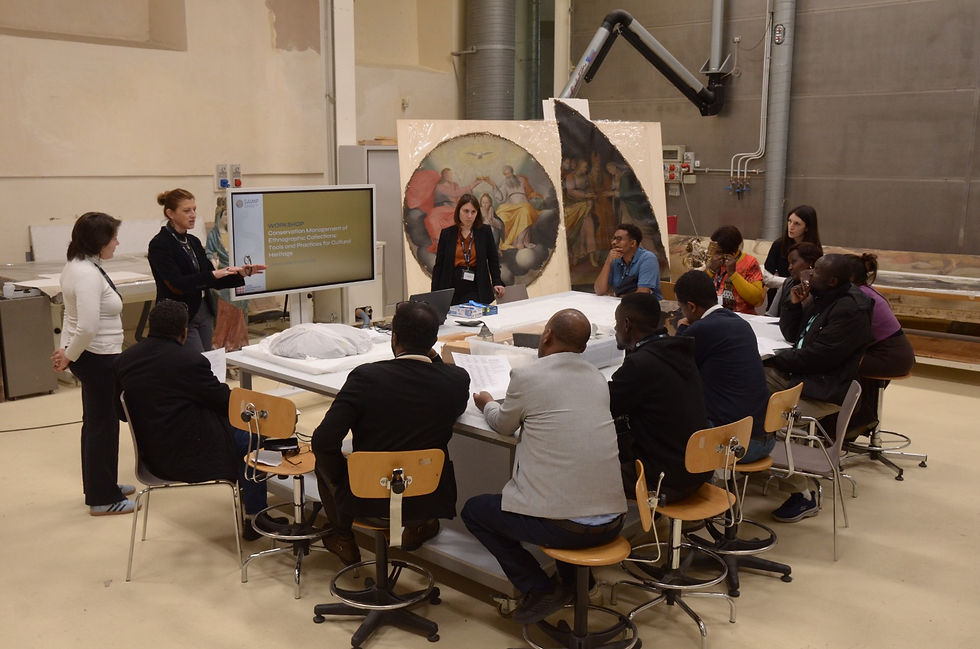
The workshop’s keynote address, delivered by Igiaba Scego, explored the evolving relationship between archives, memory and identity through a presentation titled “The Breath of the Archive: Speculative Narratives and Living Records of the Black Diaspora.” Meanwhile, Italian development cooperation officials reaffirmed support for sustainable cultural exchange, institutional capacity building and collaborative heritage initiatives between African and European institutions.
For Uganda’s heritage sector, the workshop delivered outcomes expected to significantly improve museum management systems, research standards and public accessibility to cultural collections.
Among the major resolutions adopted were the development of shared criteria for inventorying and cataloguing ethnographic and artistic objects, the harmonization of cataloguing systems across partner institutions and the creation of standardized catalogue cards with clearly defined metadata classes. These tools will feed into a shared digital platform designed to make selected collections from participating museums more accessible to researchers, students and the wider public.
Sector experts say the initiative represents a critical shift toward modern, technology-driven museum practice in Uganda, where institutions are increasingly embracing digital documentation and collaborative research to preserve fragile cultural records and expand public engagement with heritage.
The workshop also placed strong emphasis on skills development, with museum professionals, researchers, fellows and postgraduate students undergoing specialized training in inventorying and cataloguing practices, conservation assessment, archival research methodologies, digital documentation and participatory research approaches involving source and diaspora communities.
The capacity-building component is expected to strengthen Uganda’s long-term institutional ability to document and preserve heritage assets in line with international standards while supporting ongoing efforts to reposition museums as centres of education, research, tourism and cultural identity.
Following the Rome engagements, museum representatives proceeded to Turin for a further week of participatory research hosted at the Royal Museums of Turin, the Savoy Residences and the Museum of Anthropology and Ethnography of the University of Turin.
The additional engagements provided hands-on interaction with collections and advanced collaborative approaches to heritage interpretation, further reinforcing the growing role of international partnerships in shaping the future of Uganda’s museum and heritage sector.
As Uganda continues to invest in cultural preservation and heritage tourism, the SAIMP partnership is increasingly being viewed as a strategic platform for knowledge exchange, institutional modernization and the global visibility of Uganda’s cultural heritage


Great to see Uganda strengthening its role in global heritage preservation—this Italy workshop sounds like a meaningful step for museum innovation and international collaboration.
This is a great step for Uganda’s heritage sector—strong international collaboration like this really helps museums grow and share knowledge. Looking forward to seeing the outcomes of the SAIMP project!
It is fascinating reading about President Museveni’s pride in Uganda's unique cultural heritage and tourism. Promoting organic traditions is vital today. Similarly, global traditions like this 麻雀 web offer a wonderful way to experience strategic culture, much like the diverse social exchanges highlighted at the Pearl of Africa Expo.
It's wonderful to see Uganda deepening its global heritage partnerships through this landmark Italy museum workshop. The focus on cataloguing practices, digitalization, and participatory research is crucial for preserving cultural heritage. Word to markdown, I'm curious to learn more about the specific projects and collaborations that emerged from this event.
The best part about Drive Mad is that success depends more on control than pure speed. Rushing usually leads to disaster, which makes every completed level feel earned instead of accidental.